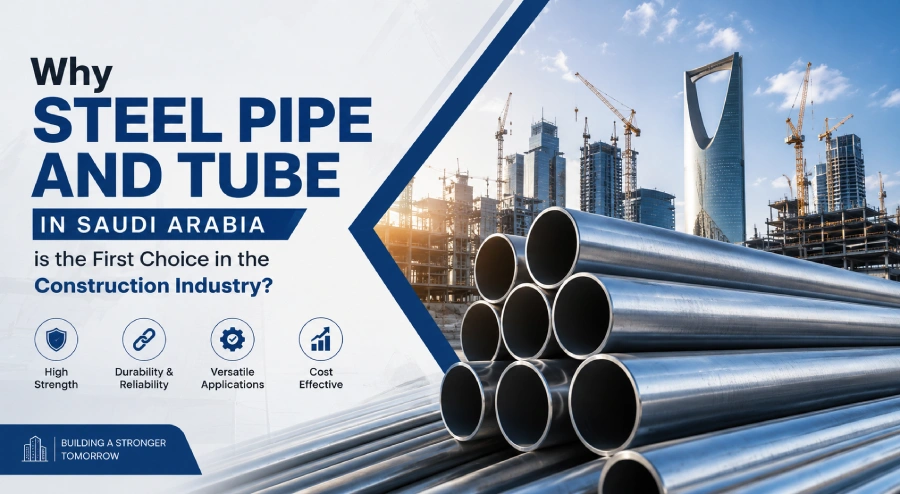
Why Steel Pipe and Tube in Saudi Arabia is the First Choice in the Construction Industry?
The construction industry in Saudi Arabia is always developing, where residential, commercial, industrial, infrastructural, warehouse, and other constructions require materials capable of providing strength and reliable functionality. Out of the various materials used in contemporary constructions, steel pipe and tube in Saudi Arabia represent a valuable option due to their strength, durability, versatility, and numerous applications.
Steel pipes and tubes may be used as a supporting frame, for fluid conveyance, and as a mechanical component in various processes. The variety in size, grades, wall thickness, and manufacturing options allows you to choose the right products for the project’s specific needs. However, in this comprehensive blog post, we will discuss some fundamental reasons why steel pipe and tube in Saudi Arabia are the most picked materials in the construction industry.
What is a Steel Pipe?
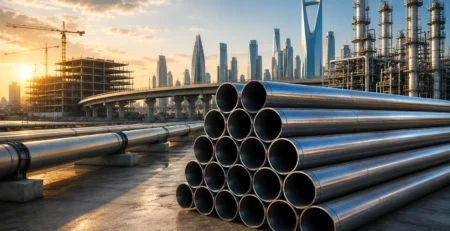
A steel pipe is a hollow, cylindrical tube made of steel used primarily to transport fluids such as oil, gas, and water, or to deliver structural support in construction. Reliable manufacturers design these pipes using two primary techniques: seamless manufacturing, which forms the metal into a robust solid tube without welded seams for high-pressure environments, and welded manufacturing, which rolls a steel plate and seals the seam. Moreover, steel pipes come in a wide range of sizes, thicknesses, and grades depending on their specific application. Steel pipes are valued for their durability, resistance to extreme temperatures, high strength, and ability to resist high pressure.
Technical Configuration of a Steel Pipe
| Parameter | Technical Configuration |
|---|---|
| Material | Carbon Steel, Stainless Steel, Alloy Steel |
| Manufacturing Process | Seamless, ERW, EFW, LSAW |
| Pipe Size | 1/2 inch to 48 inches or as required |
| Wall Thickness | Schedule 5S to Schedule XXS |
| Length | Standard 6 m or 12 m; customized lengths available |
| Pipe Ends | Plain End, Beveled End, Threaded End |
| Grade | ASTM A53, ASTM A106, API 5L, and other grades |
| Surface Finish | Black, Galvanized, Painted, Coated |
| Application | Oil & Gas, Construction, Water Supply, Chemical, Industrial |
| Standards | ASTM, ASME, API, DIN, EN, ISO |
| Testing | Hydrostatic Test, Ultrasonic Test, Radiographic Test, Dimensional Inspection |
What is a Steel Tube?
A steel tube is a hollow, long, cylindrical product made of carbon, stainless steel, or alloy. Manufacturers shape it through seamless extrusion or welded rolling methods. Also, these tubes possess high strength, rigidity, and resistance to pressure and corrosion. Moreover, industries use them extensively for structural support, mechanical elements, and the safe transport of fluids and gases, such as water, gas, and oil.
Technical Configuration of a Steel Tube
| Parameter | Typical Configuration |
|---|---|
| Material | Carbon Steel, Stainless Steel, or Alloy Steel |
| Tube Shape | Round, Square, or Rectangular |
| Outside Diameter | As per project’s requirement |
| Wall Thickness | As per application and load requirements |
| Length | Standard or customized |
| Manufacturing Process | Seamless, ERW, or Welded |
| Surface Finish | Black, Galvanized, Painted, or Polished |
| Grade | ASTM, EN, DIN, or other specified grades |
| End Type | Plain, Beveled, Threaded, or Grooved |
| Application | Construction, Structural, Industrial, Automotive, and General Engineering |
Reasons Behind the Primary Choice in the Construction Industry
There are quite a few reasons for which steel pipe and tube in Saudi Arabia remain popular choices in the world of construction and other associated uses. There are certain qualities of these materials that make them very effective choices in such situations.
1. Constructed to Withstand Hefty Loads
The high level of load-bearing capacity of materials such as reinforced concrete and steel pipe and tube in Saudi Arabia makes them widely used in construction projects. Every building, bridge, warehouse, and industrial structure needs load-bearing materials to withstand heavy loads and retain stability. The compressive strength is one of the key qualities of concrete, while the tensile strength of steel provides additional protection against pulling and bending. In such a combination, these materials form a robust structural system able to endure any load, preventing any damage, cracking, buckling, deformation, and collapse of the structure. It makes this combination perfect for such projects as high-rise buildings, bridges, factories, and infrastructure construction.
2. Designed for Optimal Long-Term Performance
Construction materials should have the capacity to operate reliably over a long period of time, sometimes over decades. They must be capable of operating in the presence of moisture, temperature changes, harsh weather, chemical attacks, and mechanical loads. Durable materials are preferable for the primary constructions as they can withstand all these factors and still preserve their structural characteristics. Their corrosion resistance and ability to withstand weathering and aging processes can increase the service life of the structure. Choosing durable materials will prevent the frequent maintenance and replacement of the components.
3. Cost-Efficient Choice for Construction Projects
Cost is an inevitable aspect of each construction project. Materials must prove to be reliable in performance without posing excessive burden on the budget of the project. Materials such as concrete and steel pipe and tube in Saudi Arabia are common and have reliable manufacturing and supply processes, which allows for predicting their cost. Moreover, there is an opportunity to obtain these materials from different sources, providing some flexibility in their procurement. Even if there will be some fluctuations in the prices of materials on the market, their overall value is still high owing to their durability, availability, and low maintenance costs.
4. Easy Procurement with Well-Developed Supply Network
It is easy to get behind schedule in the case when materials required for the construction project cannot be found in time. Concrete components, steel pipe and tube in Saudi Arabia, cement, aggregates, and other commonly used materials in the construction business are available through the developed supply network in the area. It will make the procurement process easy and facilitate a smooth workflow in the project. The local availability of materials will reduce transport distances, delivery costs, and minimize the risks of delays linked to long-distance or cross-border delivery of goods.
5. Strong Emphasis on Safety and Fire Resistance
Safety is one of the most important aspects of any construction project. The regulations require meeting certain criteria in terms of strength, stability, fire resistance, and ensuring occupants’ safety. Concrete is non-combustible in itself, and the fire resistance of steel pipe and tube in Saudi Arabia can be improved using proper coatings. These features will prolong the stable state of the structural elements in the case of fire, giving more time for evacuation of the occupants and rescue workers’ response. Therefore, the usage of materials with predictable safety performance ensures compliance with regulations and overall structural safety.
It’s Time to Wrap Things Up!
We hope this precise blog post has provided you with all the precise details about the significant reason behind the popularity of steel pipe and tube in Saudi Arabia in the construction industry. Nevertheless, choosing the right construction materials is about much more than simply comparing market prices. Durability, availability, sustainability, strength, design flexibility, and safety all influence the overall long-term success of a project.
That is why businesses and contractors, working with a skilled and experienced supplier or manufacturer, can make material selection and procurement much easier. At Matco Industry, we focus on providing dependable construction and steel solutions designed to meet diverse project needs and preferences. We are here to help you make informed material decisions for your next project. So, do not wait any longer. Connect with us today and let’s discuss your preferences and find the right steel pipe and tube in Saudi Arabia for your construction project.
Frequently Asked Questions
Steel pipes are widely used for fluid transportation, support structures, infrastructure, industrial systems, and other purposes within the scope of construction work. The suitability of steel pipes is determined based on their grade, dimension, wall thickness, and other factors that depend on the needs of a project.
Terms may sometimes overlap in their applications; however, usually, steel pipes are used for fluid transportation and are defined using nominal pipe size and schedule, while steel tubes are used mostly for structural, mechanical, and engineering applications and come in round, square, and rectangular shapes.
Certainly, certain steel pipes are made especially for high-pressure purposes. For example, seamless steel pipes are commonly chosen for challenging applications, including the need to withstand pressure. It is necessary to choose a proper steel grade, dimension, wall thickness, and manufacturing process depending on the purpose.
The most common types of manufacturing are:
- Seamless pipes suitable for applications requiring reliable performance in challenging conditions.
- ERW pipes created by shaping steel and welding the seam electrically.
- EFW pipes that are produced for certain industrial applications.
- LSAW pipes most commonly used for bigger diameter applications.
It is necessary to consider the purpose of the application, dimensions needed, loading conditions, pressure, temperature, environmental influence, material grade, finish, standards, and testing.