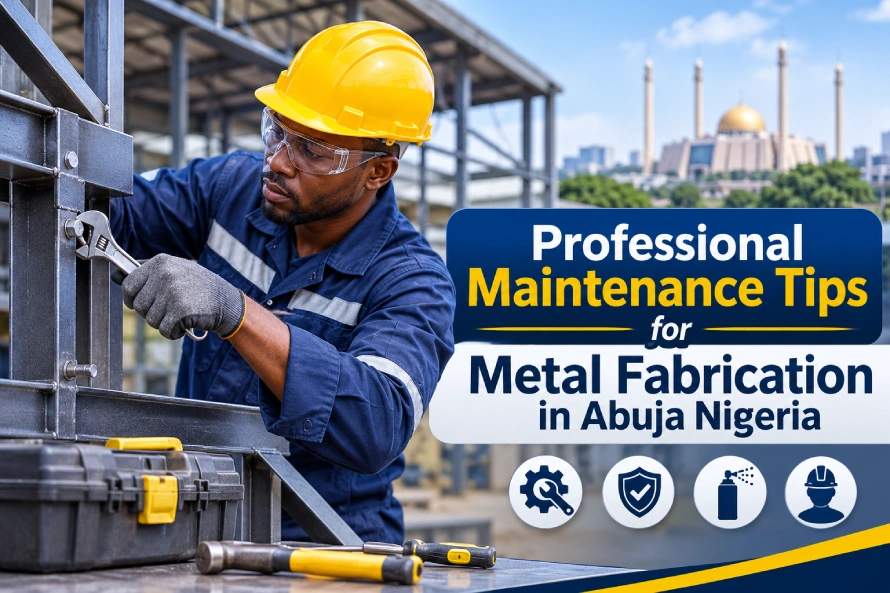
Professional Maintenance Tips for Metal Fabrication in Abuja Nigeria
Raw metal is cut, bent, and moulded into the required shape according to the structural requirements. These metal fabrications are then used for roofing, flooring, fencing, wall paneling, and other critical infrastructural applications. In short, a metal fabrication in Abuja Nigeria has extensive applications and is used in residential, commercial, and industrial spaces. Most of the applications require outdoor installation, exposing the metal fabrication to environmental threats. Therefore, maintenance is crucial for metal fabrication as it ensures structural integrity, durability, and high performance.
In this blog, we will dive deeper into the importance of maintenance and how they benefit you. You will learn how performing maintenance at the right time, in the right way, can be cost-effective for you in the long term. We will also learn when you should opt for professional support for your metal fabrication in Abuja Nigeria.
How to Maintain Metal Fabrications for Longer Life
Maintenance of metal fabrications, depending on the metal fabrication scale and surface, can either be done with or without professional help. For example, for residential structures, maintenance work only requires regular cleaning and paint work. Meanwhile, industrial and commercial metal fabrications need much more sophisticated work, including chemical treatments. The following points will provide you with a more detailed view of the maintenance of a metal fabrication in Abuja Nigeria:
1. Clean Metal Surfaces Regularly
First and foremost, remove accumulated dust, dirt, grease, and other unwanted contamination on the metal surface using suitable cleaning solutions. Regular cleaning helps prevent surface deterioration and corrosion. However, it is important to choose the right cleaning agent to prevent any surface damage.
2. Inspect for Rust and Corrosion
You should periodically check metal structures and surfaces for rust spots, discoloration, and corrosion. Detecting and addressing these issues in the early stage prevents further damage and helps maintain structural integrity.
3. Apply Protective Coatings
This is extremely important for the metal fabrication used in industrial and commercial sites. Ask the professionals for the right coating type for the particular metal surface to ensure complete protection.
4. Check Welded Joints and Connections
Inspect welded sections, bolts, nuts, and fasteners for cracks, looseness, or damage. They are most prone to danger and require the most care. Secure connections help maintain the strength and stability of fabricated structures for the long term.
5. Avoid Prolonged Moisture Exposure
Maintenance for metal fabrication in Abuja Nigeria, can also be done proactively. For example, you can reduce moisture contact or water accumulation near the metal fabrications, particularly around joints, corners, and supporting sections. You should also ensure proper drainage and ventilation to minimize corrosion risks.
6. Repair Damaged Areas Timely
Fix scratches, chipped paint, dents, and damaged protective coatings as soon as possible. Timely repairs prevent exposed metal from deteriorating further. Ignoring minor repairs is guaranteed to turn into a serious malfunction in the future.
7. Schedule Professional Maintenance
Talk to a professional and schedule periodic inspections by experienced metal fabrication professionals. With professional guidance from Matco Industry experts, you can identify structural weaknesses, assess material conditions, and recommend suitable maintenance or repair work.
When to Seek Professional Guidance
There are several cases when seeking professional assistance is mandatory for metal fabrication maintenance. It allows for optimal maintenance work, reduced overall cost, and superior safety. Take the following points as a sign that you need to opt for professional maintenance:
- Seek professional guidance when you notice severe rust, corrosion, or deterioration of protective coatings on metal surfaces. Also look if the rusted surface is coming apart as it indicates severe weakness and requirement of professional solutions.
- Consult experienced fabricators if welded joints in the metal fabrication develop cracks, fasteners become loose, or connections show signs of weakness. Joints are some of the most sensitive spots and must be maintained as a priority.
- Arrange professional inspections when metal structures show visible damage, bending, deformation, or instability. These signs cannot be ignored and cannot be resolved with a simple paint job or cleaning.
- Get expert assistance when repeated repairs fail to resolve maintenance issues or structural weaknesses.
- Consult metal fabrication professionals before modifying existing structures, increasing load-bearing capacity, or upgrading protective treatments.
Concluding Note from Matco Industry
Regular maintenance is essential to ensure the durability, structural integrity, and long-term performance of metal fabrications. From routine cleaning and corrosion inspections to protective coatings and timely repairs, every maintenance activity contributes to extending the service life of fabricated metal structures. Identifying potential issues early also helps reduce repair costs and prevents unexpected structural failures.
Choosing reliable metal fabrication manufacturers is equally important for achieving long-lasting results. This is why we recommend that you partner with Matco Industry. We understand material requirements, fabrication techniques, protective treatments, and structural specifications, all according to international quality/safety standards. As an experienced manufacturer, we can provide quality fabrication solutions, professional maintenance guidance, and suitable recommendations for residential, commercial, and industrial applications.
Need customized metal fabrication or want an accurate price quote? Contact our customer support department.
FAQs
Metal fabrication is widely used for roofing, fencing, gates, car parking structures, industrial equipment, storage tanks, staircases, flooring, and structural frameworks.
Mild steel, stainless steel, galvanized steel, and aluminium are commonly used. The choice depends on the application, strength requirements, budget, and environmental conditions.
The cost depends on the type of metal, material thickness, design complexity, fabrication techniques, dimensions, and installation requirements. Custom projects may require individual quotations.
Regular cleaning, corrosion inspections, proper drainage, and protective treatments such as galvanization and anti-corrosion coatings help minimize rust and corrosion.
Look for manufacturers with relevant industry experience, quality materials, skilled fabricators, customization capabilities, and the ability to meet your project specifications and installation requirements. Matco Industry is one of the few names that offer every benefit mentioned above.