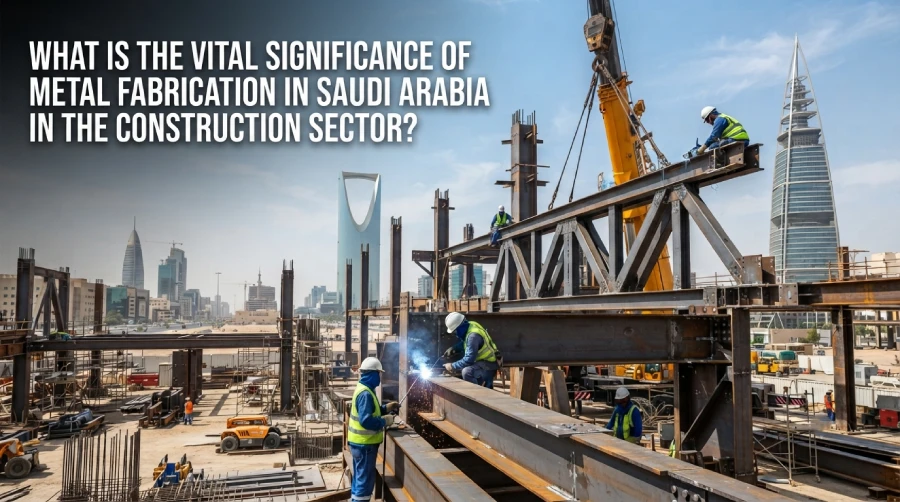
What is the Vital Significance of Metal Fabrication in Saudi Arabia in the Construction Sector?
Saudi Arabia’s construction sector is expanding across commercial buildings, industrial facilities, energy developments, infrastructure projects, and large-scale developments. Behind this growth is a robust demand for precisely manufactured metal fragments that can support structural strength while enhancing the service life. Well, this is where metal fabrication in Saudi Arabia plays an imperative role. From structural frames and support systems to stairs, handrails, customized assemblies, brackets, and platforms, fabricated metal products form an essential part of modern construction.
Metal fabrication combines engineering knowledge, specialized machinery, and skilled workmanship practices to transform raw metal into project-ready elements. When fabrication is carried out accurately for a metal building in Saudi Arabia, contractors can achieve better dimensional consistency. Thus, it also allows construction companies to develop customized solutions according to the project’s technical needs and blueprints. In this comprehensive blog post, we will explore the vital importance of metal fabrication in the construction sector. Let’s get started!
What is Metal Fabrication in Saudi Arabia?
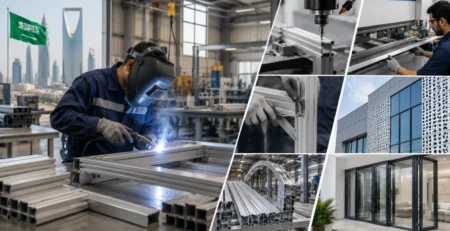
Metal fabrication in Saudi Arabia refers to the skilled process of converting metal sheets, plates, tubes, beams, pipes, and other raw materials into engineered elements or finished assemblies for construction and industrial applications. Furthermore, the entire process can include bending, forming, cutting, drilling, machining, grinding, welding, and surface finishing, depending on the required application.
Successful fabrication is strongly skill-driven because every stage demands technical accuracy and practical expertise. Fabricators must understand engineering drawings, dimensions, material specifications, and finishing standards. Modern fabrication for a metal building in Saudi Arabia might also use CNC cutting equipment and automated machinery to improve repeatability and precision.
Pros and Cons of Metal Fabrication in Saudi Arabia
Pros:
- Tailored Solutions: Components can be manufactured based on particular drawings, sizes, uses, and requirements.
- Strength of Structures: Properly chosen and fabricated metals can guarantee reliable strength for challenging construction purposes.
- Variability of Design: Manufacturing can create complicated structures, assemblies, supports, frames, and architectural metalwork.
- Construction Efficiency: Good fabrication will help to decrease cutting, drilling, and alterations on-site.
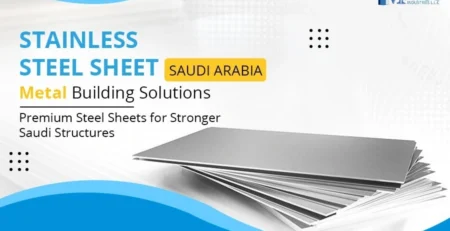
- Variety of Materials: Various grades and types of steel, stainless steel, aluminum, and other metals can be used for different purposes.
Cons:
- High Initial Cost: Use of advanced machines, expertise of employees, inspection systems, and fabrication shops can raise initial cost.
- Expertise Needed: Fabrication of complex components requires skilled welders, fabricators, machinists, and other technical personnel.
- Increased Scrap and Material Cost: Insufficient planning or poor quality cutting will lead to wastage of materials and an increase in scrap rate.
- Risk to Quality: Poor welding, improper size, or ineffective inspection procedures will affect the performance of the component.
- Lead Time: Engineering, fabrication, inspection, and finishing of larger orders may take some time.
Technical Configuration of Metal Fabrication in Saudi Arabia
| Technical Parameter | Typical Configuration / Consideration | Purpose |
|---|---|---|
| Raw Materials | Carbon steel, stainless steel, aluminium, alloy steel | Selection based on strength, environment, and use |
| Material Forms | Sheets, plates, pipes, tubes, channels, angles, beams | Offers various alternatives for structural and fabricated parts |
| Cutting | CNC plasma, laser, oxy-fuel, saw cutting | Ensures correct dimensions of parts |
| Forming | Press braking, rolling, bending, shaping | Forms necessary angles, curves, and profiles |
| Welding | MIG/MAG, TIG, SMAW, FCAW, project-specific procedures | Assembles fabricated parts correctly |
| Machining | Drilling, milling, turning, threading | Attains necessary holes, threads, tolerances, and finishes |
| Dimensional Control | Drawings, templates, gauges, measuring equipment | Checks the accuracy of the parts |
| Surface Treatment | Painting, powder coating, galvanizing, polishing | Enhances protection and appearance where necessary |
| Quality Inspection | Visual inspection and applicable NDT methods | Detects any defects in fabrication and welding |
| Final Assembly | Bolting, welding, fitting, alignment | Readies the parts for transport and installation |
| Documentation | Drawings, material records, inspection reports, certificates | Enables traceability |
Know the Importance of Metal Fabrication in Saudi Arabia in the Construction Sector
Accurate fabrication goes beyond the creation of metal parts. It bridges the gap between engineering designs and physical construction by ensuring that contractors receive parts that are ready to meet the application for which they were designed. The following topics outline why metal fabrication in Saudi Arabia still matters in construction projects.
1. Enables Structural Functionality
Metal fabrication in Saudi Arabia allows construction professionals to have custom-designed parts that may add to the stability of a structure or infrastructure project. Structural frames, columns, beams, brackets, supports, platforms, and connection parts can be designed based on engineering drawings and specific dimensions. Effective fabrication also ensures consistency of the individual parts since consistency is important in situations where several parts need to be assembled.
2. Helps to Customize the Project
Each construction project differs in terms of layout, engineering needs, dimensions, and installation requirements. The standard parts available off the shelf do not necessarily meet all requirements. Fabrication for a metal building in Saudi Arabia gives contractors and engineers an opportunity to create customized parts such as frames, supports, enclosures, stairs, railings, platforms, and many others. Using technical drawings, fabricators can customize the dimensions, forms, connections, and finishes as per the approved requirements for each project.
3. Enhances Fabrication Accuracy
Accuracy is important when there is a need to have fabricated parts that fit together. There is a possibility to create repeatable fabrication results using the available equipment in modern fabrication processes. CNC fabrication systems, measuring devices, templates, and a well-controlled fabrication process can reduce discrepancies in dimensions and connection points of the fabricated parts when used correctly. When fabricated parts have the right dimensions and connection points, there is no need for avoidable cutting and drilling.
4. Facilitates Management of Construction Schedules
The manufacturing of components in a controlled factory setting will enable several processes to be carried out on the components before they get to the construction site. The processes of metal fabrication in Saudi Arabia carried out on-site will involve just the cutting, forming, welding, finishing, or partial assembly of the component depending on what the plan requires. Effective scheduling of all the activities involving engineering, procurement of materials, manufacturing, testing, transportation, and installation of the components will be necessary to ensure that the components arrive at the site at the right time.
5. Offers Versatility of Material Options
The versatility of material options makes it possible for fabrication of a metal building in Saudi Arabia to accommodate various construction needs since it involves the selection of metals based on their intended usage. Carbon steel can be used for structural and general fabrication purposes, stainless steel can be selected for corrosion resistance and appearance, and aluminum for lower weight and corrosion resistance. The fabrication process also allows for different shapes and profiles of metals to be used by engineers and contractors.
It’s Time to Conclude Here!
Metal fabrication is a significant link between engineering design and physical construction. Its value extends beyond shaping metal. It involves material selection, quality inspection, dimensional accuracy, finishing, documentation, joining techniques, and controlled production. When fabricated components are managed correctly, construction teams can get elements that better meet their requirements.
For businesses searching for reliable metal fabrication in Saudi Arabia, choosing an experienced fabrication partner can make a difference to project execution. At Matco Industry, we focus on combining technical expertise, quality-focused processes, skilled fabrication, and application-specific solutions to meet diverse industrial and construction needs. Whether your project needs customized metal elements or larger fabrication needs, our team is ready to understand your specifications and develop a suitable solution. Connect with us today and let’s discuss your metal fabrication requirements.
Frequently Asked Questions
Metal fabrication is used to fabricate various structural parts like beams, frames, brackets, stairs, platforms, railings, supports, enclosures, and custom parts. The exact application will depend on the requirements of the project design.
Metals commonly used in fabrication include carbon steel, stainless steel, aluminum, and different alloy steels. The choice of metal will depend on its strength, corrosion resistance, weight, environmental exposure, appearance, cost, and other factors.
Metal fabrication is used to manufacture components from raw metal in order to make them suitable for construction projects. The right workshop practices can eliminate some amount of cutting, drilling, welding, and other modifications required during the installation phase.
Yes. Customized manufacturing is possible since the fabricators can make the parts based on the approved designs, dimensions, material, joining, and finishing requirements of the project.
Welding makes the joints between two or more compatible metals. The welding method chosen varies with the material, its thickness, joint structure, and application.