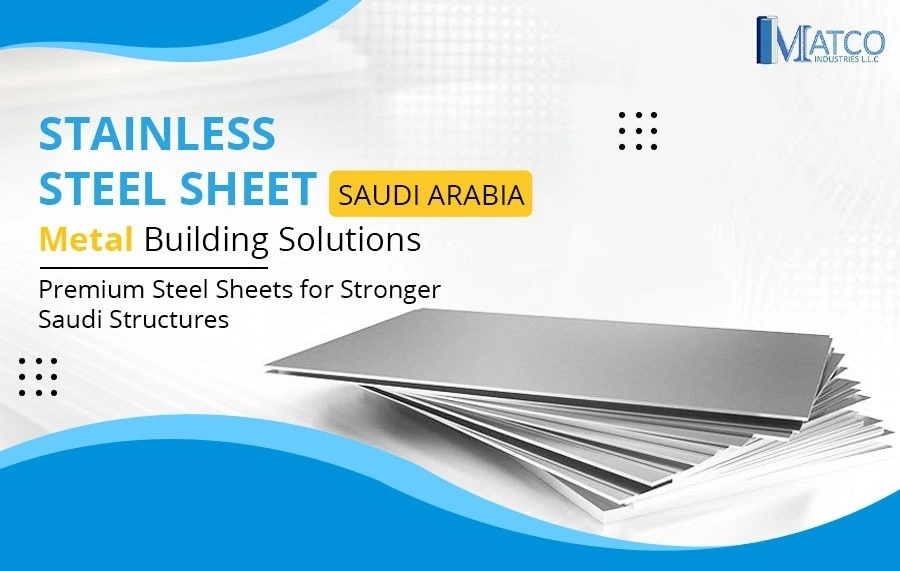
Stainless Steel Sheet Saudi Arabia- Choose the Proper Shape, Dimension, & Grade
When it comes to stainless steel sheet Saudi Arabia, it is one of the crucial materials in industrial fabrication, construction, and manufacturing projects. Their strength-to-weight ratio, versatility, flexibility, and corrosion-resistant properties make them the foremost choice for a wide range of applications, from cladding and roofing to machinery panels, building frameworks, support structures, and residential equipment. Stainless steel alloy is known for its aesthetic appeal, making it one of the most sought-after alloys in current manufacturing industries.
Furthermore, not choosing the right stainless steel sheet Saudi Arabia can lead to compromising on aesthetics, sustainability, flexibility, and safety of your metal building project. However, in this comprehensive guide, we will provide a detailed overview of how to choose the right stainless steel sheets based on their shapes, dimensions, grades, needs, project requirements, and more. Let’s get started with the blog.
What is the Significance of Stainless Steel Sheet in Metal Building Projects?
Stainless steel sheets play an imperative role in a modern metal building in Saudi Arabia, offering a combination of aesthetic appeal, durability, and structural integrity that few other materials can match. Moreover, their exceptional properties, largely derived from a chromium content of at least 10.5%, make them valuable in demanding environments. Here are the key reasons why stainless steel sheets are significant in metal building projects:
- Stainless steel includes chromium that forms an invisible layer at the surface. This layer self-restores and provides protection against rust and corrosion caused by humidity, salt, and chemicals, making the material ideal for use in coastal regions or heavily contaminated areas.
2. The material features extraordinary strength due to high tensile strength (approximately 515-625 MPa for grade 304). It implies that stainless steel can withstand heavy loads and is resistant to bending, abrasion, and shock damage over many years of use. - The material does not require repainting or recoating. As a result, it requires minimal maintenance and frequent replacement when used under harsh conditions.
- In terms of architectural applications, stainless steel sheet Saudi Arabia has several advantages. Firstly, it is aesthetically pleasing because it offers a wide range of finishes, including brushed, polished, mirror, and matte. Therefore, it can be used effectively in both commercial and residential buildings.
- It is hygienic since the surface of stainless steel is non-porous and easily cleaned. Thus, bacteria and contaminants cannot accumulate on the surface of the material. That is why stainless steel is widely used in hospitals, food processing units, and other public buildings.
- It is sustainable because stainless steel can be recycled infinitely without any changes in mechanical properties.
- Stainless steel is highly temperature-resistant since it retains mechanical strength under high-temperature exposure. It makes the material suitable for use in fire-prone structures or for fireproof structural elements.
Factors to Keep in Mind When Choosing Stainless Steel Sheet Saudi Arabia
There are numerous stainless steel grades available, and choosing the right one for a metal building in Saudi Arabia can prove difficult for some people. Fortunately, it becomes simple if you know just a few properties of each commonly used type of stainless steel. Here are five things that you must take into account when selecting the appropriate grade.
1. Corrosion resistance
It goes without saying that stainless steel is highly valued for its rust resistance. Nevertheless, not all types of stainless steel exhibit the same level of corrosion resistance. Austenitic steel is considered the most effective because it contains higher levels of chromium than other types. Meanwhile, martensitic and ferritic stainless steels are less expensive alternatives. However, they do not provide the same level of corrosion protection. When both heat treatment and corrosion resistance are necessary, it is recommended to use martensitic stainless steel. Austenitic and ferritic stainless steels cannot be easily hardened.
3. Operating environment
Your project and the conditions in which stainless steel would be used play an important role. Temperature range, low-pH environment, stress, the presence of small cracks where corrosive substances may accumulate, and other factors should be considered carefully. If you need reliable and versatile stainless steel grades, use 304 and 316. They combine great strength with good corrosion resistance, regardless of temperature changes.
4. Strength & ductility
You must also consider the strength and ductility of the stainless steel sheet in Saudi Arabia. Grades with higher levels of chromium and nickel are considered optimal. Stainless steel 420 is a good example. It is possible to harden and stress-relieve 420 stainless steel. Consequently, this alloy boasts an extremely high tensile strength, nearly three times that of type 304 stainless steel. Therefore, if your project involves heavy loads and strength is critical, you should opt for this alloy. Generally, stainless steels with great tensile strength must be used to ensure reliability and durability.
5. Process temperatures
When choosing stainless steel grades, you should check whether they meet the temperature requirements of your project. Every stainless steel has maximum temperature resistance. If it is not appropriate, you can exclude a certain alloy from the list of candidates. It is very important since your process may involve high temperatures. Moreover, each stainless steel grade responds differently to high-temperature exposure and heat-treatment techniques. If you are aware of such properties, you can easily select a proper alloy.
6. Weldability & formability
Remember to think about how a stainless steel alloy can be formed or welded. For example, welding lower-grade stainless steel sheet Saudi Arabia often leads to cracking or corrosion, which can cause future issues. When it comes to weldability, austenitic steel is the best option. In particular, grade 304L has a lower carbon content and therefore is less prone to cracking. Meanwhile, grade 347 has additional components that enhance the stability of stainless steel during welding. You can safely use ferritic types 430 and 439. However, martensitic stainless steels are not recommended because they tend to be fragile. If you need a flexible stainless steel grade, austenitic (304) or ferritic (430) types are worth considering.
Get Your Hands on Our Premium Stainless Steel Sheets Today!
In a metal building project, choosing the right stainless steel sheets is one of the most imperative parts. Furthermore, if you are searching for the best manufacturer of stainless steel sheet Saudi Arabia, look no further than Matco Industry. We ensure that each product is manufactured with premium technology and high-quality materials. Additionally, we accept bulk orders so you can get all the required products under one roof without compromising on cost or quality. So, what are you waiting for? Contact us today and talk to our experts, who will help you through the entire process.
Frequently Asked Questions
For high-humidity or coastal environments, grade 316 stainless steel is the perfect choice for metal building in Saudi Arabia. Hence, it contains molybdenum, which significantly enhances resistance to saltwater corrosion compared to grade 304.
Selecting the right thickness relies on your application. Here are some stainless steel sheet thicknesses that you know:
- 3 mm – 1 mm: It is ideal for decorative panels and light fabrication
- 1 mm – 3 mm: It is suitable for cladding, roofing, and general construction
- 3 mm and above: It is best for heavy structural and industrial applications
Finishing options for stainless steel sheets include:
- Mirror Finish: Reflective is used for decorative purposes.
- Brushed Finish: Textured appearance that is common in architectural designs.
- Matte Finish: Non-reflective surface with an industrial appeal.
- Polished Finish: Smooth and shiny surface.
The best stainless steel grade for welding purposes is grade 304L because it has a low carbon content that prevents cracking. Another alternative for weldable grades is grade 347 if more stable welds are needed.
Yes, stainless steel can be used in high-temperature situations because it does not undergo any physical or chemical changes. Grades such as 304 and 316 have high resistance to heat.