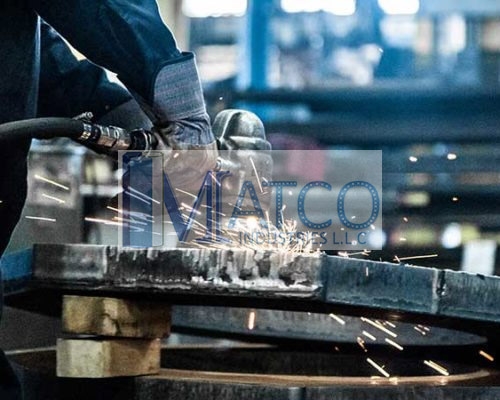
MS / Mild Steel Fabrication in Saudi Arabia

Nowadays, when you look around at the contemporary cityscape of soaring skyscrapers, appealing stadiums, and eye-catching infrastructure, a steel structure in Saudi Arabia is the one raw material that quietly supports it all. Therefore, it is remarkably robust, durable, adaptable, versatile, and has become one of the most significant backbones of modern construction worldwide. In Saudi Arabia, several investors are choosing steel structures for their construction projects, whether for residential, warehouse, industrial, or commercial spaces. The most significant reason businesses choose steel structures is their ability to be built quickly without compromising durability.
In today’s world, construction projects demand rapid completion, cost-effective solutions, and a guarantee of lifespan. Therefore, Steel construction in Saudi Arabia has proven to be a game-changing solution for engineers, property owners, and builders alike. Moreover, in this comprehensive guide, we will discuss all the key points, from steel shed installation in Saudi Arabia to its fundamental types. Likewise, understanding what a steel structure is, its key types, the wide range of applications, and the advantages it delivers is the primary step toward making smarter building decisions.
- Description
Description
What is a Steel Structure?
A steel structure in Saudi Arabia is a metal framework manufactured for structural steel elements, such as columns, trusses, and beams, that are connected together to support loads and provide consistency. It serves as the “spine” of a building, distributing weight from the roof and floors to the base. Additionally, steel is favored for its high strength-to-weight ratio. Likewise, it allows for skyscrapers and longlife spans. Elements are usually prefabricated in manufacturing factories and welded or bolted on-site, making construction significantly faster than concrete. While highly sustainable and 100% reusable, steel construction in Saudi Arabia needs end-to-end protection against corrosion and fire to maintain its integrity.
Key Features of Steel Structure:
- It offer high strength-to-weight ratio
- It provides vital high seismic resilience properties
- It offers uniformity and reliability
- It enhances the speed of construction
- It contains adaptability and is easy to modify
Pros:
- Prefabrication and Accuracy
- Ductility
- Architectural Versatility
- Durability and Pest Resistance
Cons:
- Susceptibility to Corrosion
- High Maintenance Costs
- Sensitivity to High Temperatures
- Lower Acoustic Insulation
Technical Configuration of a Steel Structure
Here are some standard technical configurations commonly used in steel shed manufacturing in Saudi Arabia. Have a look:
| Component | Specification | Material Grade | Standard |
|---|---|---|---|
| Main Columns | H-Beam (e.g., 400×200×8×13 mm) | Q345B / ASTM A572 Gr.50 | GB / ASTM |
| Main Beams (Rafters) | H-Beam (e.g., 350×175×7×11 mm) | Q345B / ASTM A572 Gr.50 | GB / ASTM |
| Secondary Beams | C/Z Purlins (e.g., C200×70×20×2.5 mm) | Q235B / ASTM A36 | GB / ASTM |
| Roof Purlins | C/Z Section Steel | Q235B | GB |
| Wall Girts | C Section Steel | Q235B | GB |
| Bracing System | Round Bar / Angle Steel | Q235B | GB |
| Roof Panel | Corrugated Steel Sheet (0.5–0.6 mm) | Color Coated Steel | ASTM / EN |
| Wall Panel | Sandwich Panel (50–100 mm) | EPS / PU / Rockwool Core | EN / ASTM |
| Bolts (High Strength) | M20 / M24 | Grade 8.8 / 10.9 | ISO 898-1 |
| Anchor Bolts | M24–M30 | Grade 8.8 | ASTM F1554 |
| Surface Treatment | Hot Dip Galvanized / Epoxy Paint | — | ISO 1461 |
| Design Load | Wind / Snow / Seismic | — | Local Code (e.g., Eurocode / ASCE 7) |
| Fire Protection | Intumescent Coating | — | EN / ASTM |
What are the Types of Steel Structure?
There are several types of steel structures used in construction. Furthermore, each steel structure in Saudi Arabia is designed to meet particular needs. Likewise, here are some common types of steel structures that every builder, contractor, or owner should know before starting their project:
1. Steel Frame Structure
This steel structure in Saudi Arabia is the most common type and is used in a wide range of buildings, from residential properties to high-rise commercial offices. The steel frame structure consists of horizontal steel beams, steel connections, and vertical steel columns that connect the other parts. Furthermore, the columns and beams are joined by bolting or welding, creating a stable, rigid structure that is beneficial for building construction.
Advantages:
- They are lightweight and need less foundation work than concrete building structures.
- They are durable, and steel shed manufacturing in Saudi Arabia uses reusable material, making it ideal for the environment.
- They are easy to assemble, reducing construction labor costs and time.
Disadvantages:
- They can be a little bit more expensive than other construction techniques.
- The energy efficiency of a construction building can be affected if insulation is not installed correctly.
- They need mindful design and planning to ensure structural integrity.
2. Steel Truss Structures
Steel truss structures are a significant method of steel construction in Saudi Arabia, using a series of interconnected triangles to evenly distribute weight across the building. Furthermore, steel truss structures are typically used for bridges, roofs, and other applications requiring long-life durability.
Advantages:
- This steel building installation Saudi Arabia needs less material than other structures, making it more cost-effective.
- They are lightweight.
- They are easy to assemble and offer lower labor costs.
- Steel truss structures are sustainable and can resist harsh environmental conditions.
Disadvantages:
- They can be more complex to construct and design.
- They need specialized tools and knowledge.
- They can be difficult to modify or expand.
- They are prone to corrosion and damage.
3. Steel cable structures
Cable steel building installation in Saudi Arabia uses steel cables to support the structure’s weight, forming a suspension system. Therefore, these steel cables are typically used for suspension roofs and bridges. The steel cable structure consists of cables anchored to columns or towers at either end. Nevertheless, this steel structure in Saudi Arabia is stretched taut across its span, forming an intermission that supports its weight. The cables are tied up to the ground or to concrete blocks to deliver additional stability.
Advantages:
- They can cover long distances without intermediate supports, making them perfect for suspension bridges.
- They are lightweight.
- They need less raw material and are cost-effective.
- They are durable and can resist harsh environmental conditions.
Disadvantages:
- They can be complex to construct and design.
- They need specialized knowledge and tools.
- They require mindful maintenance to prevent corrosion
- They can be more difficult to modify.
4. Steel space frame structures
Space frame steel structure in Saudi Arabia is a construction method that uses a three-dimensional framework of steel tubes to support the structure’s weight. Furthermore, steel space-frame structures are widely used for extensive buildings, such as hospitals, sports arenas, commercial buildings, and airports. This steel construction in Saudi Arabia consists of a series of welded steel tubes forming a three-dimensional framework. The structural framework is then clad and roofed to complete the structure.
Advantages:
- After steel building installation Saudi Arabia, they can span long distances without any intermediate support.
- They are ideal for extensive buildings that require a wide-open space.
- They need less material and are cost-effective
- They are sustainable and can resist extreme environmental conditions.
- After the steel building installation in Saudi Arabia, it can be easily maintained as it is accessible for repair and inspection.
Disadvantages:
- They consist of a complex design.
- They need professional hands and tools for the steel shed installation in Saudi Arabia.
- They need careful maintenance to prevent corrosion.
- They are difficult to expand or modify.
- They have restricted flexibility.
5. Light-gauge steel structures
A light-gauge steel structure in Saudi Arabia uses lightweight steel frames distribute the overall structure’s weight. Thus, it is commonly used for small commercial and residential buildings. Likewise, the light-gauge steel structure consists of steel frames made of thin steel sheet, cold-formed into Z- or C-shaped sections. After that, these steel sheet sections are assembled into a frame using bolts or screws.
Advantages:
- They are easy to assemble.
- They reduce labor costs and construction time.
- They need less foundation work than concrete structures.
- They are reusable and sustainable materials.
- They are environmentally friendly.
Disadvantages:
- They are not appropriate for buildings with long spans or high loads.
- They don’t have fire-resistant properties.
- They consist of thin steel frames that might not provide enough strength.
Applicable Areas of Steel Structure
Steel structures are foundational to contemporary infrastructure, used wherever durability, rapid construction, and high strength are required. Furthermore, here are some applicable areas categorized by different sectors:
- The Line (NEOM)
- Floating Industrial Complexes
- Office Buildings
- Airport Terminals
- High-Rise Skyscrapers
- World-Class Stadiums
- Oil & Gas Facilities
- Large-Scale Warehousing
- Energy Infrastructure
- Manufacturing Plants
Concluding Here!
We hope this comprehensive blog has provided you with end-to-end details about steel structures. However, if you are looking for a trustworthy manufacturer of a steel structure in Saudi Arabia, look no further than Matco Industry. We offer an extensive range of construction products that help reduce construction time and lower labor costs. So, do not wait any longer. Connect with us today and get high-quality steel structures without spending a fortune.
Frequently Asked Questions
Steel structures are suitable for warehouses, factories, stadiums, airports, oil and gas plants, and high-rise buildings. When large open areas or long spans are required, steel is the most feasible choice.
Yes, of course. Steel structures are designed to withstand extreme weather conditions. Thus, it contains appropriate surface treatments, such as hot-dip galvanizing and fire-protection coatings, that prevent corrosion and heat damage.
Steel structures are prefabricated structures. The structure is manufactured in a factory and erected on site. Therefore, it significantly reduces construction time.
The initial cost may be marginally higher, but steel structures are cost-effective in the long run because of their easy maintenance, durability, and fast construction time. Labor costs are also lower because of the fast construction time.