Aluminium Fabrication in Saudi Arabia- Specify Fabrication Process for Multiple Applications
When you’re just about to begin a project that includes a wide range of metalwork, especially one demanding aluminium fabrication or wider industrial metal fabrication, one of the best choices you must make is whether to opt for steel or aluminium. However, as we all know, aluminium fabrication in Saudi Arabia is one of the most widely used and versatile manufacturing processes across contemporary industries. From structural frames and weightless enclosures to ideal elements for medical devices, electronics, and aerospace, aluminium offers an infrequent blend of corrosion resistance, robust structure, and manufacturability.
So, if you are planning to start a new projects that require metalwork, assembly, or a product, and need to understand the process of aluminium fabrication, this blog post covers all the topics that you need to know before raising a quote from a reliable and skilled manufacturing partners. Let’s get started with the blog to know the precise details.
What is Aluminium Fabrication?
The process of aluminium fabrication in Saudi Arabia refers to any procedure applied to manufacture aluminium in a particular shape. Many physical and chemical operations may apply in this procedure, which may end up making aluminium have various physical properties. Aluminium fabrication processes may be very diverse. Thus, the physical properties of aluminium produced by each of these processes become very different. It becomes highly necessary for one to distinguish among these processes since some of the features become the major basis of the selection of a particular process.
This is because sometimes a certain feature, such as the strength or the shape of aluminium, can only be produced by a certain process. Or sometimes two different processes can produce aluminium, but one leaves an unsuitable surface finish. This means that many other features, like the cost and speed of production, play a vital role in determining a particular process.
Key features of Aluminium Fabrication
- Aluminum is one-third lighter than steel, but certain types of aluminum alloy can be hardened to attain the strength of other denser materials. As such, aluminum makes an excellent material for transport and structural frames.
- Aluminum is a very ductile and malleable metal. That is the reason why fabricators are able to manipulate it through cutting, bending, stamping, or extruding it into complicated shapes without cracking.
- Since aluminum does not corrode easily and is able to keep its shape in extreme cold and heat, there is little maintenance needed in fabricated aluminum products.
Technical Configuration of Aluminium Fabrication
| Configuration Item | Description |
|---|---|
| Material | Aluminium Alloy (e.g., 6063-T5, 6061-T6) |
| Profile Thickness | 1.2 mm – 3.0 mm (as per design) |
| Surface Finish | Powder Coated, Anodized, or PVDF Coated |
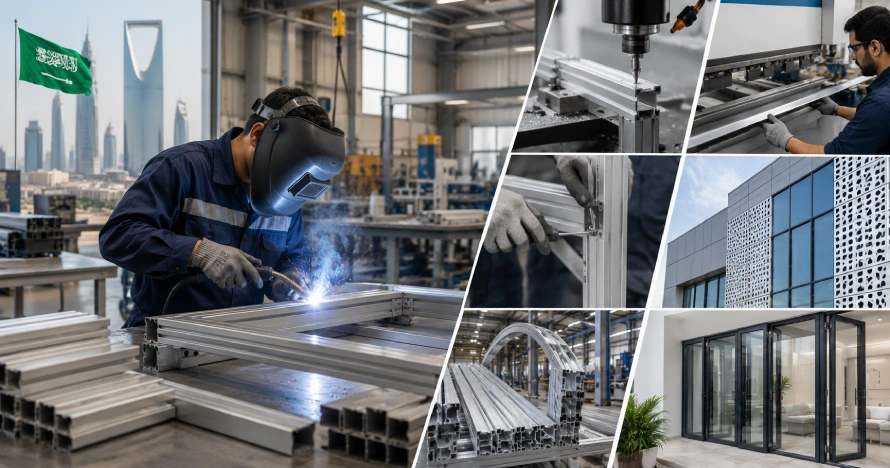
| Fabrication Method | Cutting, Drilling, Milling, Welding, and Assembly |
| Cutting Accuracy | ±0.5 mm |
| Joint Type | Mechanical Fasteners, Rivets, or TIG Welding |
| Glass Compatibility | 4 mm – 24 mm Single/Double Glazed Units |
| Hardware | Stainless Steel Hinges, Handles, Locks, Rollers |
| Sealant & Gaskets | EPDM Gaskets and Structural Silicone Sealant |
| Quality Standards | Fabrication and installation as per approved drawings and applicable industry standards |
Specify the Vital Process of Aluminium Fabrication
Here are some vital processes of aluminium fabrication in Saudi Arabia that you must know before purchasing it for your new project:
1. Design and Planning
Before cutting begins, every process of aluminium fabrication in Saudi Arabia should start with adequate design and planning. Fabricators convert ideas or drawings to detailed 3D models through the use of CAD software. Thus, they can determine the dimensions, structure, and exact design of the product that they will produce. Besides, they chose the aluminium alloy for the project. Different types of alloys can be used, such as 6061 and 5052. Proper planning increases efficiency and decreases material waste.
2. Cutting
After the product design is ready, the process of cutting starts. Aluminium sheets, plates, or extrusions are cut to the desired shapes using CNC saws, laser cutters, or waterjet cutters. Waterjet cutting technology is widely used when aluminium sheets are thick or the design is complicated. No heating is applied during this process; therefore, the aluminium keeps all of its mechanical characteristics, and edges become smooth.
3. Forming and Bending
When the aluminium sheets have been cut to the required size and shape, their forming takes place. Fabricators use hydraulic press brakes in order to bend aluminium into exact angles. Rolling, stamping, and punching are among other possible ways. Since aluminium is lightweight and flexible, its forming process becomes easier in comparison with other metals.
4. Joining and Assembly
When all aluminium pieces have been formed, joining and assembly take place. TIG or MIG welding is among the most widespread techniques that fabricators use in order to join pieces to each other. In some cases, rivets, bolts, or even structural adhesives are preferred instead of welding. The choice depends on the product design, the necessary strength, and the purpose of the product.
5. Surface Finishing
The last process is surface finishing in aluminium fabrication in Saudi Arabia. This process includes improving the surface of the aluminium in order to improve its appearance and increase durability. Despite the natural resistance to corrosion, anodizing and powder coating increase the degree of this resistance to moisture and scratches. Any rough surfaces are polished and smoothed.
Applications of Aluminium Fabrication in Various Industries
Aluminium comes in a robust, lightweight, resistant, and malleable material. Also, the aluminium fabrication in Saudi Arabia plays a significant role in various industries. That is one of the vital reasons why fabricated aluminium products are used in both decorative and structural applications, offering durability and sustainability performance across commercial, domestic, and industrial projects. Nevertheless, let’s find out some major applications of aluminium fabrication in different industries:
1. Construction and Architecture
Several sectors that use aluminium fabrication, including architecture and construction for curtain walling, framing, cladding, roofing, handrails, and windows, because of its contemporary look, design, corrosion resistance, and strength.
2. Aerospace
The vital key aspect of the aerospace industry is that all its elements are robust, sustainable, and lightweight. Therefore, it is one of the major reasons why aluminium is widely used in the aerospace industry. Body panels, the structure of light airplanes, internal parts, and parts of the framework are the main areas where aluminium fabrication in Saudi Arabia is used.
3. Automotive
The automotive sector uses aluminium fabrication for the manufacture of several parts of an automobile, such as chassis parts, bodywork, and engine parts.
4. Renewable Energy
The renewable energy sector makes extensive use of aluminium fabrication in areas such as solar panel frames, wind energy, and housing, where it is required to function in extreme weather conditions.
5. Marine
The marine sector is among the most extreme environments in the industry, where aluminium fabrication is used on a wide range of applications. Aluminium’s natural resistance properties allow it to be used in various applications, such as railing, ladders, boats, and offshore.
Choose Your Reliable Aluminium Fabricators to Get the Best Deals!
As we all know, aluminium fabrication is a cost-effective process for designing and producing metal enclosures, thin sheet metal parts, and boxes with clean bends and edges. Therefore, when it comes to choosing the best and most reliable aluminium fabricators, Matco Industry is your best companion. At Matco Industry, our team delivers cutting-edge and premium-quality aluminium fabrication in Saudi Arabia that can be particularly designed for a broad range of projects, applications, and industries with high-quality raw materials.
Furthermore, whether you need to know about aluminium fabrication, in-depth details about the forming and cutting process, final product availability, or anything else, connect with our team. They will ensure to clear every doubt and provide accurate information according to your specific needs and preferences. So, do not wait any longer. Connect with experts from Matco Industry today!
Frequently Asked Questions
There are many industries that use aluminium fabrication in the Kingdom. It is used in construction for the fabrication of windows, curtain walls, cladding, and handrails. The automobile industry uses aluminium in making lightweight components, while aircraft companies use it in making aircraft structural components.
Some of the processes that are used in the fabrication of aluminium include;
- Design and engineering process using CAD technology.
- Cutting process using CNC, laser, and water jet technology.
- Bending and forming process.
- Welding process of the fabricated product.
- Process of surface finishing, like anodizing, powder coating, and polishing.
- Quality inspection process before delivering the fabricated product.
It is important to select the best fabrication company to ensure that you get a high-quality product and services. Some of the factors to consider in selecting the best fabrication company are industry experience, advanced fabricating machinery, competent engineers, qualified and certified quality standards, and the supplier’s customised solutions capability.
The cost of aluminium fabrication depends on some factors other than having a set price. These factors may include the type of aluminium alloy, material thickness, complexity of fabrication process, surface finishing method, amount produced, and the requirement for installation of the product. The cost of custom-designed aluminium products will be higher than that of standard aluminium products. You need to get a quotation from a reputable fabricating company.